

Table of Contents
The hospitality industry has changed significantly over the last few years. Hotels are no longer competing only on location, pricing, or amenities. Today, digital experience plays a major role in influencing how guests discover, evaluate, and book a property.
While Online Travel Agencies (OTAs) continue to be an important part of hotel distribution, more hotels are now focusing on increasing direct bookings through their own websites and digital channels.
The reason is simple: direct bookings give hotels greater control, stronger guest relationships, and better long-term profitability.
In 2026, this shift is becoming even more important as hotels look for sustainable growth strategies in an increasingly competitive market.
What Are Direct Bookings?
Direct bookings are reservations made through a hotel’s own channels instead of third-party platforms.
These channels may include:
- Hotel website booking engine
- Phone reservations
- WhatsApp inquiries
- Social media booking links
- Google Hotel listings
- Email campaigns
Unlike OTA bookings, direct reservations allow hotels to interact with guests directly without paying high commission fees.
Why Hotels Are Prioritizing Direct Bookings
1. Reducing OTA Commission Costs
One of the biggest reasons hotels focus on direct bookings is to reduce dependency on OTA commissions.
Third-party booking platforms often charge significant commission percentages on every reservation. Over time, this can impact hotel profitability, especially for independent properties and boutique hotels.
Direct bookings help hotels:
- Improve profit margins
- Retain more revenue per reservation
- Reduce acquisition costs
- Build stronger long-term guest relationships
While OTAs remain useful for visibility, relying entirely on them can limit revenue growth.
2. Better Control Over Guest Experience
When guests book directly, hotels gain more control over the overall guest journey.
Hotels can:
- Communicate directly with guests
- Offer personalized experiences
- Share property-specific information
- Send pre-arrival and post-stay communication
- Upsell room upgrades or additional services
This direct interaction helps create stronger guest engagement and improves overall satisfaction.
In today’s hospitality market, guest experience is one of the biggest differentiators.
3. Stronger Brand Identity
Direct bookings help hotels build their own brand instead of depending entirely on third-party platforms.
When guests visit a hotel’s website, they experience:
- The hotel’s branding
- Unique offerings
- Visual storytelling
- Property experience
- Personalized communication
A strong website combined with a seamless booking engine helps hotels create trust and improve booking confidence.
Hotels that invest in their digital presence are better positioned to compete in the modern hospitality landscape.
4. Increased Use of Mobile Bookings
Mobile bookings continue to rise rapidly.
Today’s travelers expect:
- Fast-loading websites
- Easy booking journeys
- Mobile-friendly payment systems
- Instant confirmation experiences
If a hotel website is outdated or difficult to navigate, potential guests may leave before completing a reservation.
Modern booking engines are now designed to provide:
- Mobile-first experiences
- Faster checkouts
- Real-time availability
- Secure payment integration
- Personalized booking flows
Hotels that optimize for mobile users often see better conversion rates and higher direct booking performance.
5. Access to Valuable Guest Data
Guest data has become extremely valuable for hospitality businesses.
Direct bookings help hotels collect useful insights such as:
- Booking preferences
- Travel behavior
- Room preferences
- Seasonal demand patterns
- Repeat guest trends
This data helps hotels improve:
- Marketing campaigns
- Pricing strategies
- Personalized offers
- Guest loyalty programs
- Revenue management decisions
Hotels that understand guest behavior can make smarter operational and marketing decisions.
6. Better Revenue Opportunities
Direct bookings often create more opportunities for additional revenue.
Hotels can promote:
- Early check-ins
- Late check-outs
- Room upgrades
- Dining packages
- Spa services
- Local experiences
These upsell opportunities are easier to manage when guests book directly through hotel-owned channels.
Over time, this can significantly improve average booking value and overall hotel revenue.
The Role of Hotel Technology in Direct Booking Growth
Increasing direct bookings requires more than just a website.
Hotels now need connected technology systems that support the complete guest booking journey.
This includes:
- Booking Engine
- Property Management System (PMS)
- Channel Manager
- CRM & Guest Communication
- Revenue Management Tools
When these systems work together, hotels can create a seamless booking experience while managing inventory, pricing, and guest communication efficiently.
Modern hospitality platforms are helping hotels automate operations while improving direct booking performance.
Challenges Hotels Face Without the Right Technology
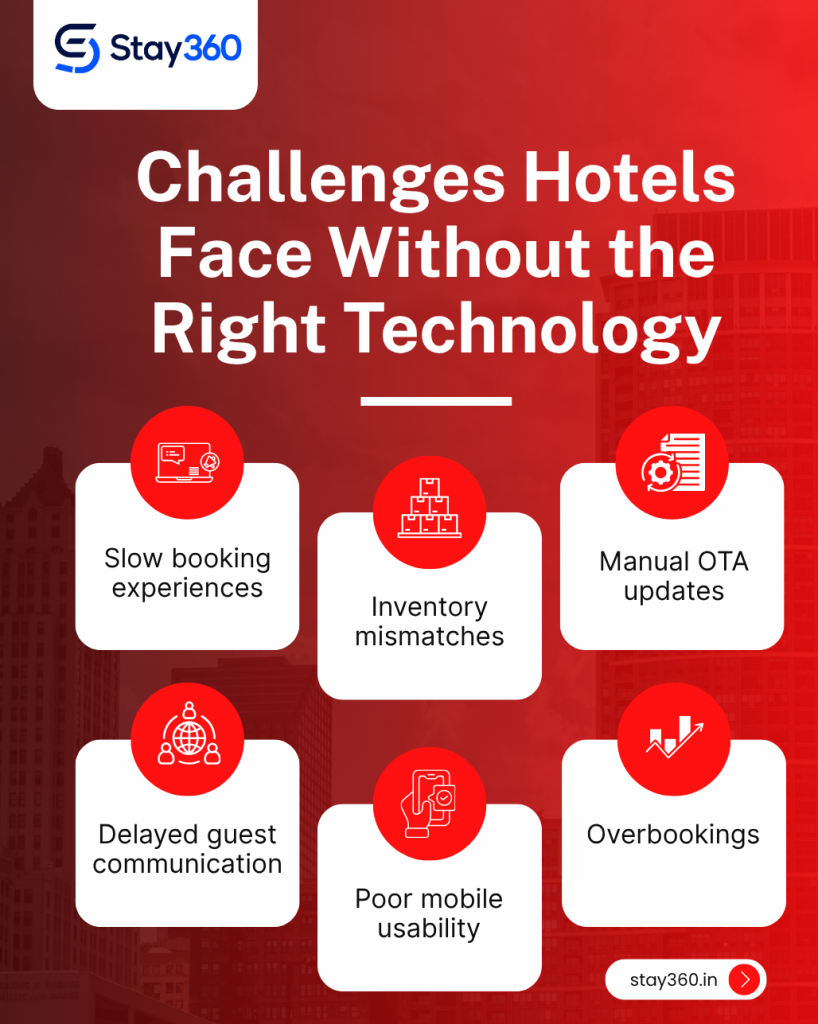
Hotels using disconnected or outdated systems often struggle with:
- Slow booking experiences
- Inventory mismatches
- Overbookings
- Delayed guest communication
- Poor mobile usability
- Manual OTA updates
These operational gaps can negatively impact both guest experience and revenue.
Technology now plays a critical role in helping hotels stay competitive.
How Stay360 Helps Hotels Increase Direct Bookings
Stay360 is designed to help hotels simplify operations while improving booking performance.
Our platform combines:
- Hotel Booking Engine
- Property Management System (PMS)
- Channel Manager
- CRM & Guest Communication
- Revenue Management System
- Hotel Extranet
into one connected ecosystem.
This helps hotels:
- Improve direct booking conversions
- Reduce OTA dependency
- Manage pricing in real time
- Deliver better guest experiences
- Simplify operational workflows
Whether you operate a boutique property, business hotel, resort, or hotel chain, Stay360 helps create a more connected and revenue-focused hospitality experience.
Final Thoughts
The hospitality industry is becoming more digital, competitive, and guest-driven every year.
Hotels that focus on building stronger direct booking strategies are gaining:
- Better control over revenue
- Stronger guest relationships
- Improved profitability
- Greater operational flexibility
OTAs will continue to play an important role in hotel distribution, but direct bookings are becoming essential for long-term hospitality growth.
Hotels that invest in modern booking experiences, connected systems, and guest-focused technology today will be better prepared for the future of hospitality.