



The hospitality industry is evolving faster than ever. Guest expectations are changing, booking behaviors are shifting, and hotels are under constant pressure to improve both operations and guest experience while staying profitable.
Today, running a hotel is no longer just about offering comfortable rooms or great service. It’s about delivering seamless digital experiences, faster communication, personalized stays, and smarter operations.
From AI- guest engagement to revenue optimization and direct booking strategies, technology is becoming the foundation of modern hospitality growth.
Here are the top hotel technology trends shaping the future of hospitality in 2026, and how hotels can stay ahead.
Table of Contents
1. Direct Bookings Are Becoming a Bigger Priority
For years, hotels heavily depended on OTAs for visibility and reservations. While OTAs continue to play an important role, hotels are now focusing more on increasing direct bookings through their own websites.
Why?
Because direct bookings help hotels:
- Reduce commission costs
- Improve profit margins
- Own guest relationships
- Collect valuable guest data
- Create better personalized experiences
Modern booking engines now offer:
- Mobile-first booking experiences
- Faster checkouts
- Integrated payment gateways
- Real-time availability
- Personalized offers and upselling
Hotels that invest in strong booking experiences are seeing better conversion rates and improved revenue performance.
2. AI Is Changing Hotel Operations
Artificial Intelligence is no longer limited to large hotel chains. Even independent hotels and resorts are now using AI-driven tools to improve efficiency and guest engagement.
Hotels are increasingly adopting AI for:
- Dynamic pricing recommendations
- AI chatbots for instant guest support
- Automated guest communication
- Demand forecasting
- Smart upselling suggestions
- Personalized guest experiences
AI helps hotels respond faster, automate repetitive tasks, and make more informed business decisions.
Instead of replacing hospitality teams, AI is helping staff focus more on guest service while technology handles operational tasks.
3. Cloud-Based Hotel Management Is Becoming the Standard
Traditional hotel systems often created operational silos.
Different tools for reservations. Separate systems for pricing. Manual inventory updates. Disconnected guest communication.
Cloud-based hotel software is solving these challenges bringing everything together into one connected ecosystem.
Modern hospitality platforms now combine:
- Property Management System (PMS)
- Booking Engine
- Channel Manager
- CRM
- Revenue Management
- Guest Messaging
- Reporting & Analytics
The biggest advantage?
Hotel teams can manage operations from anywhere while accessing real-time updates across departments.
This flexibility is especially important for multi-property hotel groups and fast-growing hospitality businesses.
4. Revenue Management Is Becoming More Data-Driven
Static pricing no longer works in today’s competitive hospitality market.
Demand changes daily. Competitor pricing shifts constantly. Guest booking behavior evolves quickly.
Modern hotels are now adopting revenue management systems (RMS) that use live data to optimize pricing strategies.
Revenue management tools help hotels:
- Improve occupancy
- Increase RevPAR
- Adjust pricing dynamically
- Analyze booking trends
- Forecast demand patterns
- Identify high-performing channels
Instead of relying on guesswork, hotels can make pricing decisions backed real-time insights.
5. Guest Communication Is Becoming Instant & Personalized
Today’s guests expect faster responses and personalized communication.
Hotels are now using automated communication systems across:
- SMS
- Chat support
Automated guest messaging helps hotels:
- Send booking confirmations instantly
- Share check-in details
- Offer upsells and upgrades
- Collect feedback after stays
- Improve overall guest experience
Personalized communication not only improves satisfaction but also increases repeat bookings and loyalty.
6. Hotel Websites Are Becoming Revenue Platforms
A hotel website is no longer just a digital brochure.
It’s now one of the most important revenue channels for hospitality businesses.
Modern hotel websites are designed with:
- Faster loading speed
- Mobile-first experiences
- SEO optimization
- Direct booking integration
- Conversion-focused layouts
- Personalized offers
Hotels are realizing that better website experiences directly impact booking conversions.
A slow or outdated website can result in lost revenue, even when the hotel receives good traffic.
7. Data & Analytics Are Driving Smarter Decisions
Hospitality businesses today generate large amounts of operational and guest data.
The challenge is turning that data into actionable insights.
Hotels are increasingly using analytics to track:
- Occupancy trends
- Revenue performance
- Guest behavior
- Booking sources
- Marketing ROI
- Seasonal demand patterns
Access to centralized analytics helps hotel owners and managers make smarter decisions faster.
Instead of reacting late, hotels can proactively improve pricing, operations, and guest experience.
Why Hospitality Technology Matters More Than Ever

The hospitality industry is becoming more competitive every year.
Guests expect convenience. Teams need efficiency. Hotels need stronger profitability.
Technology is no longer just an operational tool. It has become a business growth strategy.
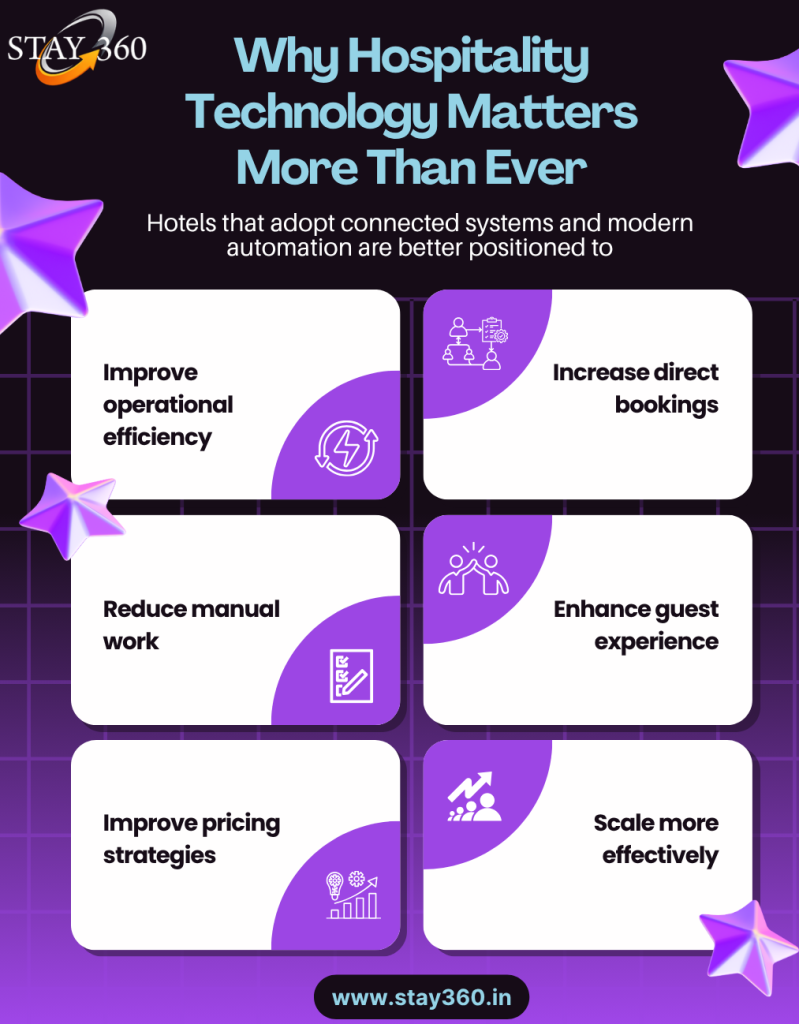
Hotels that adopt connected systems and modern automation are better positioned to:
- Improve operational efficiency
- Increase direct bookings
- Reduce manual work
- Enhance guest experience
- Improve pricing strategies
- Scale more effectively
The future of hospitality belongs to businesses that are agile, connected, and data-driven.
How Stay360 Helps Hotels Modernize Operations
Stay360 is designed to help hospitality businesses simplify operations and grow smarter.
Our all-in-one hotel technology platform combines:
- Property Management System (PMS)
- Booking Engine
- Channel Manager
- Revenue Management System
- CRM & Guest Communication
- Hotel Extranet
- Multi-Property Management
This helps hotels manage everything from one centralized ecosystem while improving guest experience and maximizing revenue opportunities.
Whether you operate a boutique hotel, luxury resort, business property, or multi-location hospitality group, Stay360 helps streamline operations while supporting long-term growth.
Final Thoughts
Hospitality is changing rapidly.
The hotels that succeed in the coming years won’t just offer great stays. They’ll offer seamless digital experiences, smarter operations, and personalized guest journeys.
Investing in the right hospitality technology today can help hotels build stronger guest relationships, improve operational efficiency, and create more sustainable growth in the future.
The future of hospitality is connected, automated, and experience-driven, and hotels that adapt early will have a significant competitive advantage.