


The hospitality industry is no longer just about offering rooms, it is about managing a complex ecosystem of distribution channels, pricing strategies, guest expectations, and operational workflows.
As competition intensifies and margins become tighter, hotels are increasingly turning to technology platforms to streamline operations and unlock new revenue opportunities.
However, not all technology solutions deliver the same value. Fragmented systems often create inefficiencies, while integrated platforms enable hotels to operate with precision, agility, and scalability.
For modern hospitality businesses, adopting a unified technology platform is not just an operational upgrade, it is a strategic business decision.
The Shift from Operations to Revenue-Focused Technology
Traditionally, hotel systems were designed to manage operations- reservations, check-ins, and inventory. While these functions remain essential, they are no longer sufficient in today’s market.
Hotels now require systems that can:
- Optimize pricing in real time
- Manage multi-channel distribution
- Drive direct bookings
- Provide actionable business insights
- Improve overall profitability
This shift reflects a broader industry trend: moving from operational management to revenue optimization.
Key Challenges Faced Hotels Today
Before understanding the value of integrated platforms, it is important to recognize the core challenges hotels face:
1. High OTA Dependency
Online Travel Agencies (OTAs) continue to dominate distribution, but their commission structures significantly impact margins. Many hotels struggle to balance visibility with profitability.
2. Disconnected Systems
Using separate tools for PMS, booking engines, and channel management leads to inefficiencies, data inconsistencies, and operational delays.
3. Manual Processes
Manual updates for inventory, pricing, and bookings increase the risk of errors and limit scalability.
4. Lack of Real-Time Insights
Without centralized data, decision-making becomes reactive rather than strategic.
The Role of Integrated Hotel Technology Platforms
An integrated hotel technology platform brings together multiple functionalities into a single ecosystem. This includes:
- Property Management System (PMS)
- Booking Engine
- Channel Manager / Extranet
- Analytics and Reporting Tools
By consolidating these capabilities, hotels can operate more efficiently while gaining greater control over their business.
Driving Revenue Through Direct Booking Enablement
One of the most immediate benefits of a unified platform is the ability to increase direct bookings.
Direct bookings offer several advantages:
- Lower acquisition costs compared to OTAs
- Greater control over pricing and promotions
- Direct access to customer data
- Stronger brand positioning
A high-performing booking engine, integrated with real-time inventory and pricing, allows hotels to convert website traffic into revenue more effectively.
Over time, this reduces dependency on third-party platforms and improves overall profitability.
Real-Time Distribution and Inventory Management
Managing multiple distribution channels without automation is both inefficient and risky.
An integrated platform ensures:
- Real-time synchronization of room availability
- Consistent pricing across all channels
- Elimination of overbookings
- Centralized control over inventory
This level of control is critical for maintaining operational accuracy and maximizing occupancy rates.
Leveraging Data for Strategic Decision-Making
Data has become a key differentiator in the hospitality industry. Hotels that can effectively analyze and act on data are better positioned to outperform competitors.
Modern technology platforms provide insights into:
- Occupancy trends
- Revenue performance metrics
- Booking patterns
- Customer behavior
These insights enable hotels to:
- Adjust pricing strategies dynamically
- Identify high-performing channels
- Optimize marketing efforts
- Forecast demand more accurately
Data-driven decision-making transforms hotel management from reactive to proactive.
Operational Efficiency as a Competitive Advantage
Efficiency is not just about reducing costs, it is about improving overall business performance.
Automation within integrated platforms helps streamline:
- Reservation management
- Guest communication
- Reporting and analytics
- Payment processing
By reducing manual intervention, hotels can:
- Minimize errors
- Improve staff productivity
- Deliver faster and more reliable service
This directly impacts guest satisfaction, which in turn influences reviews, ratings, and repeat bookings.
Scalability for Growing Hospitality Businesses
As hotels expand, whether through additional properties or increased inventory, the complexity of operations grows exponentially.
A scalable technology platform allows businesses to:
- Manage multiple properties from a single interface
- Standardize processes across locations
- Maintain consistent performance metrics
- Adapt quickly to changing market conditions
Scalability is essential for long-term growth and sustainability.
The Strategic Value of a Unified Platform
While individual tools can address specific needs, they often fall short when it comes to delivering holistic value.

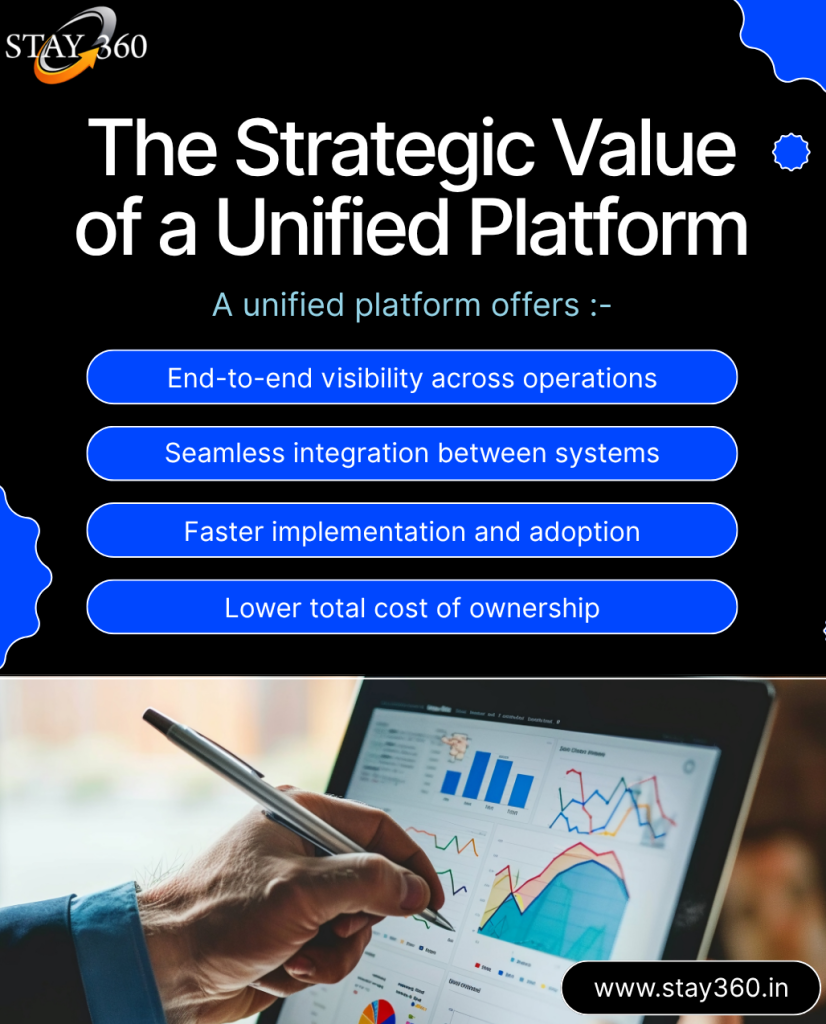
A unified platform offers:
- End-to-end visibility across operations
- Seamless integration between systems
- Faster implementation and adoption
- Lower total cost of ownership
More importantly, it aligns technology with business objectives enabling hotels to focus on growth rather than system management.
How Stay360 Supports Modern Hospitality Businesses
Platforms like Stay360 are designed to address the evolving needs of the hospitality industry offering a fully integrated solution.
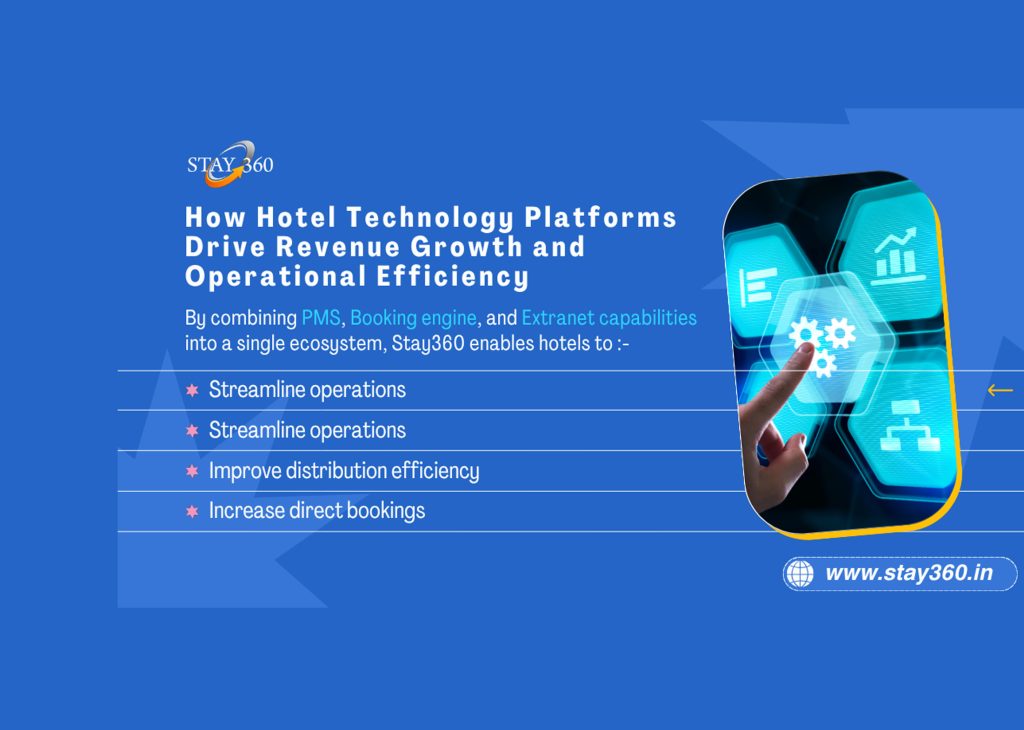
By combining PMS, booking engine, and extranet capabilities into a single ecosystem, Stay360 enables hotels to:
- Streamline operations
- Improve distribution efficiency
- Increase direct bookings
- Make data-driven decisions
Its unified architecture ensures that all components work together seamlessly, reducing complexity and enhancing performance.
Conclusion
The hospitality industry is becoming increasingly competitive, and success depends on the ability to operate efficiently while maximizing revenue.
Hotels that continue to rely on fragmented systems will face limitations in scalability, profitability, and customer experience.
In contrast, those that adopt integrated technology platforms will gain a significant competitive advantage through better control, smarter decision-making, and improved operational efficiency.
As the industry continues to evolve, the question is no longer whether hotels should invest in technology, but whether their current systems are capable of supporting future growth.